Gamification, you’ve probably heard of it before. In a nutshell, gamification is the use of game principles and techniques to positively influence and enhance the behaviour of a target audience. These principles are not just applied in the gaming industry, as they are now commonly used across sectors like education, science, and marketing. Gamification is a powerful tool that leads to higher conversions and greater engagement with your target audience. In this article, we explore what gamification is and how it can be applied.
Can gamification contribute to your organisation’s goals? Feel free to contact us and explore the possibilities.
What is gamification?
A widely used definition of gamification is:
| The application of game principles and techniques in a non-game context to guide human behaviour in a positive way.
In this context, gamification is applied in non-game settings, such as education, businesses, and healthcare. Game principles and techniques serve as tools through which behaviour can be positively changed, engagement can be created, and knowledge can be transferred in a playful manner.
Gamification Examples
There are several ways in which gamification can be implemented in apps. In this chapter, we will explore three different ways to apply gamification in apps, including examples from DTT’s portfolio.
Reward
One of the most powerful ways to motivate people is by rewarding their actions. There are several reward principles, such as giving participants an immediate reward after completing a certain action, encouraging them to continue. The reward can take many forms, for example, points or unlocking new content.
An app where the reward system has been applied is the Famiflora Loyalty App, which was developed for Famiflora in Mouscron, the largest garden and decoration centre in Belgium. The user can link their customer card to the app, and with every purchase, they earn points. This motivates the user to make purchases at Famiflora, and the accumulated points can be redeemed for exciting rewards, such as a free bonsai tree or a discount voucher.
Collection
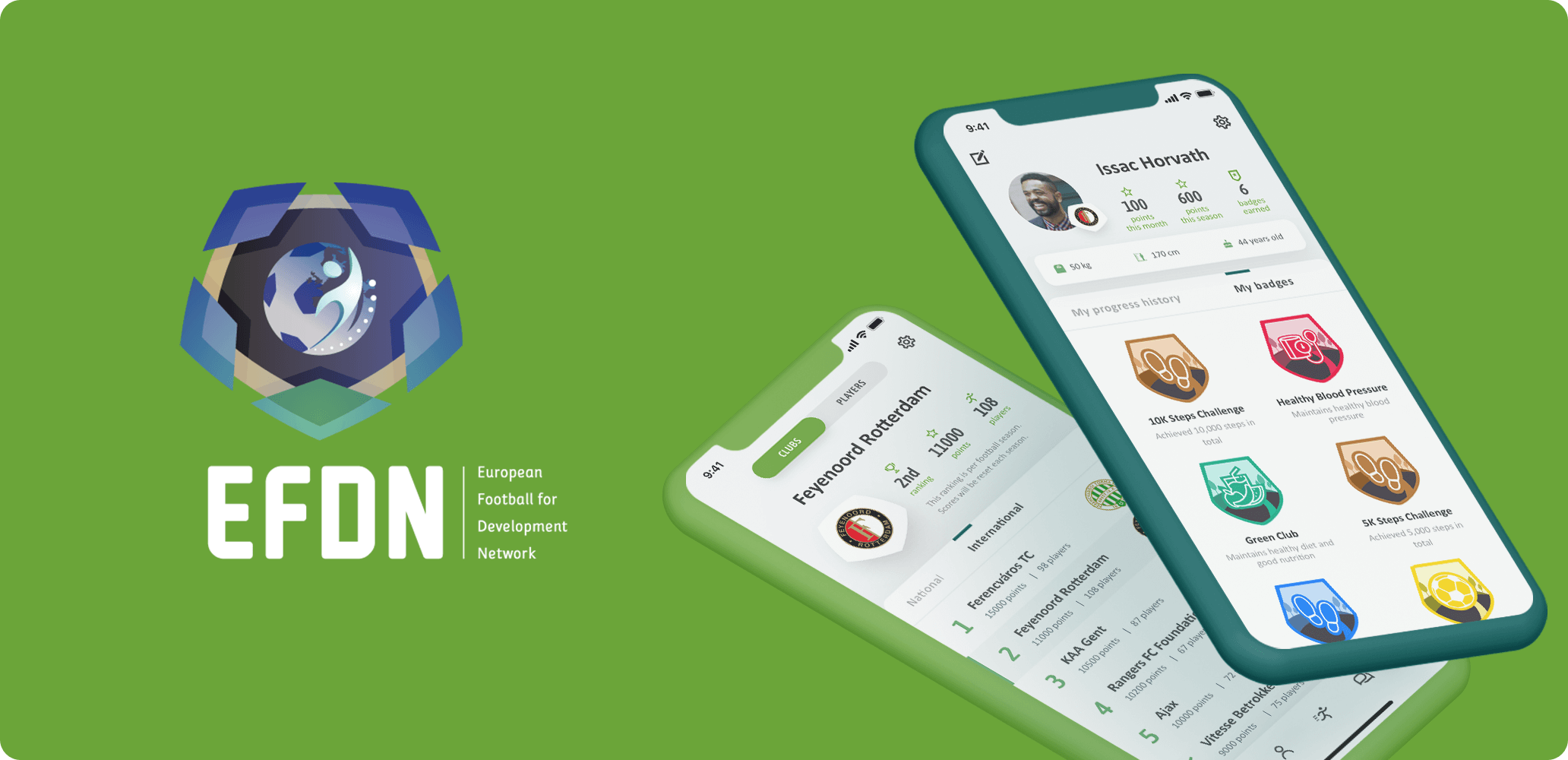
Humans are naturally hunters and gatherers. It’s ingrained in our DNA, which is why collecting works so well as a motivator. By giving users something to collect, you provide them with the opportunity to create their own goal. Collecting gives a sense of accomplishment when achieving that goal. Furthermore, the collection (badges, points, or prizes) can be shared and compared with others.
The app where we applied the gamification collection element is the Healthy Football League App. European Football for Development Network (EFDN) aimed to promote an active and healthy lifestyle. Simply measuring the distance walked or cycled would not be enough to motivate users. To boost motivation, badges were added that users can earn when achieving specific milestones, and the badges can be shared on social media.
Progress
It’s a familiar story: you’re asked to fill in “just a few” questions in a survey, only to find that 10 minutes later you’re still at it, with no end in sight. The conversion rate for such surveys is low, because people like to know in advance how long a process will take and whether the actions they’re taking are bringing them closer to the end goal. By dividing the process into steps or showing the remaining time, you make the process more transparent. When users see progress, they are more motivated to continue.
A solution where we applied this gamification element is the Canteen Scan from the Netherlands Nutrition Centre. The aim of the Canteen Scan is to help organisations set up their canteens in a way that promotes healthy food choices. By completing the scan, users receive a score in the form of a recommendation report. Completing the scan can take some time, and to motivate users to finish, the scan is divided into various topics, and users can see a percentage that reflects their progress.
Combination
It’s, of course, also possible to combine all the above elements. An app with gamification in education is the Litter Challenge, developed in collaboration with the municipality of Hollands Kroon. The goal of the app? To actively engage primary school children in keeping the municipality clean, while providing playful information on sustainability and culture. The app uses rewards for achieving certain goals in the form of badges, and players can collect clothing and accessories as they ‘level up’ and track how many ‘Experience Points’ they need to earn before progressing to the next level.

Applying Gamification in Apps
Would you like to increase motivation and engagement within your target audience using gamification? We’d be happy to discuss how to make that happen. Whatever your goal, with your idea and our expertise, we’ll achieve the desired outcome. Feel free to contact us for a no-obligation conversation.